
Most gin is bottled at 40 to 47 percent alcohol by volume, which is 80 to 94 proof. In the United States, 40 percent is the legal minimum: federal rules define gin as a spirit that takes its main flavor from juniper and is "bottled at not less than 40 percent alcohol by volume (80° proof)," in the words of 27 CFR 5.144. Navy strength gins go higher, to about 57 percent. Bottles below 80 proof, such as flavored gins and sloe gin, fall into other legal classes.
Proof itself is simple: in America it is twice the alcohol by volume, so 80 proof means 40 percent alcohol. The history behind the word is less simple, and it explains why a British gin label from the 1970s said 70° proof for the same strength. Below: gin strength by style, what proof means, where the word came from, how strong a gin and tonic really is, and why a stronger gin tastes different.
Gin alcohol content, by style
Strength is one of the few things about gin the law puts a number on. The figures below are the legal floors where they exist and the usual range where they do not.
| Alcohol by volume | US proof | |
|---|---|---|
| US legal minimum for gin | 40% | 80 |
| EU legal minimum for gin | 37.5% | 75 |
| Most gins on American shelves | 40 to 47% | 80 to 94 |
| Gatsby Gin | 44.8% | 89.6 |
| Navy strength gin | about 57% | about 114 |
| Flavored gin, US minimum | 30% | 60 |
Two of those rows need a word. Flavored gin, a gin with added fruit or other flavors, is classed as a flavored spirit under 27 CFR 5.151 and may be bottled as low as 30 percent. Sloe gin, despite its name, is not a gin at all under US rules but a liqueur "with the main characteristic flavor derived from sloe berries" (27 CFR 5.150), so the gin minimum does not apply to it. In Europe, the floor for gin is 37.5 percent, set by the EU spirit drinks regulation, which is why some gins are bottled a little weaker for Europe than for the United States.
What does proof mean in alcohol?
Proof is a second way of stating how much alcohol a drink contains. The federal definition, in 27 CFR 5.1, is "the ethyl alcohol content of a liquid at 60 degrees Fahrenheit, stated as twice the percentage of ethyl alcohol by volume." To get from one to the other, double or halve:
- 80 proof is 40 percent alcohol, the legal minimum for gin, vodka, whiskey, rum and brandy.
- 90 proof is 45 percent.
- 100 proof is 50 percent, not 100 percent.
- 200 proof would be pure alcohol.
Alcohol by volume is the number that counts on a US label. Under 27 CFR 5.65, every spirits label must state the alcohol content as a percentage by volume. Proof is optional, and if it appears it must sit in the same field of vision as the percentage. The figure has to be accurate to within 0.3 percentage points, so a gin labeled 47 percent may measure anywhere from 46.7 to 47.3.
Gin starts much stronger than it ends. Its base is neutral spirit, which US rules define as spirit distilled at 95 percent alcohol or more, or 190 proof (27 CFR 5.142). The botanicals are distilled with it, and only then is the gin brought down with water to the strength on the label. How that works step by step is in how gin is made, and what is actually in it.
Where the word proof comes from
The word is English and goes back to the sixteenth century, when spirits were taxed by strength and strength needed a test. One early method was the gunpowder test: soak a little gunpowder in the spirit and try to light it. If it still burned, the spirit was "above proof." If it did not, it was under proof, with too much water in it. The test works because the saltpeter in gunpowder dissolves more readily in water than in alcohol, and spirit just strong enough to pass came to about 57 percent alcohol by volume, according to the history set out in Wikipedia's entry on alcohol proof.
Britain later replaced the test with a measurement of density, fixed in law in 1816, and kept that system until January 1, 1980, when it switched to alcohol by volume. On the British scale, 100 proof was 57.15 percent, so converting meant multiplying the percentage by about seven fourths. That is why an old British gin at 40 percent was labeled 70° proof, a number that would mean only 35 percent in America.
The American system, in use since the middle of the nineteenth century, set 100 proof at an even 50 percent, which is where the simple doubling comes from. It survives because the federal government still taxes spirits by it. The excise tax is $13.50 per proof gallon, with lower rates on each distillery's first gallons of the year, and a proof gallon is a gallon at 50 percent alcohol. A gallon of 80 proof gin counts as 0.8 of a proof gallon; a gallon at 100 proof counts as one.
Navy strength gin
Navy strength is the old British 100 proof carried into the present: gin bottled at about 57 percent alcohol by volume, or about 114 proof by the American count. The name comes with a story. Gin went to sea alongside the gunpowder, the story goes, and only spirit at proof strength would leave the powder usable if a cask leaked over it. It is a good story and a hard one to document, and navy strength is not a legal category anywhere. On a label it is simply a strength. Where it sits among the other styles is in types of gin, every style explained.
Is gin stronger than vodka?
Not by law. Gin and vodka share the same 80 proof minimum in the United States, and so do whiskey, rum and brandy. Proof for proof, a pour of any of them holds the same amount of alcohol. What differs is where producers choose to bottle: vodka mostly sits at 80 proof, while many gins are bottled stronger, because the extra alcohol carries more of the botanical flavor. The full comparison is in gin vs vodka: what is the difference.
Against beer and wine, gin is several times stronger by volume. The National Institute on Alcohol Abuse and Alcoholism uses 5 percent for regular beer and 12 percent for table wine, against 40 percent for distilled spirits. In the institute's terms, 1½ ounces of 80 proof gin, 5 ounces of wine and 12 ounces of beer each hold about 0.6 fluid ounces of pure alcohol, which it counts as one standard drink.
How strong is a gin and tonic?
A gin and tonic is far lighter than the gin in it. Our recipe is 1½ ounces of gin to 4½ ounces of tonic, one part to three. Made with 80 proof gin, that glass is about 10 percent alcohol before any ice melts, a little under a glass of wine, and it holds one standard drink. With a 90 proof gin it comes to about 11 percent. The full recipe and the other ratios are in how to make a gin and tonic, Gatsby style.
A martini is the opposite case, because it is almost all gin. Two and a half ounces of 80 proof gin with half an ounce of dry vermouth holds about 1.8 standard drinks. Every calorie in gin comes from its alcohol, so the same arithmetic sets the calories: the higher the proof, the more in each pour. The numbers drink by drink are in how many calories are in gin.
Does a stronger gin taste different?
Yes, and that is the main reason so many gins are bottled above the minimum. The aromatic oils that carry gin's flavor dissolve in alcohol, so a stronger gin holds and releases more of them, and it keeps more of its character once ice and mixers dilute it. That matters most in a martini or a Negroni, where the gin has to hold its own against the vermouth.
Strength has a cost, too. Past a point, the heat of the alcohol crowds out the botanicals, which is why tasters add a few drops of water to a strong gin before judging it, as described in what does gin taste like.
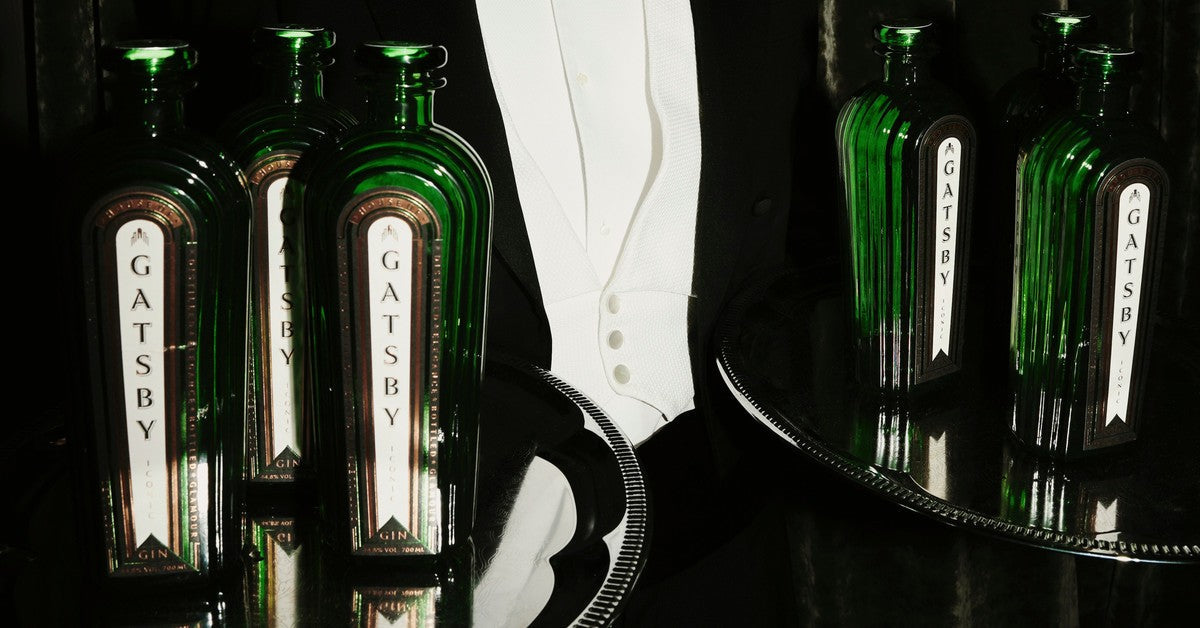
Gatsby Gin is bottled at 44.8 percent alcohol by volume, or 89.6 proof: above the 40 percent floor and well short of navy strength. It is a London Dry gin of ten botanicals, made in small batches in a copper pot still in Fort Myers, Florida, and that strength is what carries the juniper and citrus through a martini or a gin and tonic. More on the style itself is in what is London Dry gin.
Frequently asked questions about gin alcohol content
What proof is gin?
Most gin is 80 to 94 proof, or 40 to 47 percent alcohol by volume. In the United States it cannot be bottled below 80 proof, and navy strength gin reaches about 114.
What percentage of alcohol is in gin?
Usually 40 to 47 percent. The legal minimum is 40 percent in the United States and 37.5 percent in the European Union.
Is 100 proof the same as 100 percent alcohol?
No. In the United States, proof is twice the alcohol by volume, so 100 proof is 50 percent alcohol. Pure alcohol would be 200 proof.
Does 70 proof mean 70 percent alcohol?
No. On an American label, 70 proof means 35 percent, below the US minimum for gin. On an old British label from before 1980, 70° proof meant about 40 percent.
Is gin stronger than vodka?
Not by law. Both must be at least 80 proof in the United States. Many gins are bottled a little stronger than the usual 80 proof vodka, but at the same proof they hold the same amount of alcohol.
What is navy strength gin?
Gin bottled at about 57 percent alcohol by volume, about 114 US proof, which was 100 proof on the old British scale. It is a strength, not a legal category.
How much alcohol is in a gin and tonic?
With 1½ ounces of 80 proof gin and 4½ ounces of tonic, the drink is about 10 percent alcohol before the ice melts, and it holds one US standard drink.
How strong is Gatsby Gin?
Gatsby Gin is bottled at 44.8 percent alcohol by volume, or 89.6 proof.