
London Dry gin is a gin that gets all of its flavor from distillation. Juniper and the other botanicals go into the still with the spirit, and what comes out is the finished taste: nothing is stirred in afterward for flavor, color or sweetness. The result is the crisp, juniper-led style that most classic cocktails were written for, and despite the name, it can be made anywhere in the world.
That last point surprises people. London Dry is not a place of origin the way Tennessee whiskey is. It is a description of how a gin is made, and the word "dry" describes the absence of sweetness, not a flavor.
What London Dry gin means
Every gin starts the same way: a neutral spirit, flavored mainly with juniper. The question that separates the styles is how the flavor gets in.
A London Dry gin puts the botanicals into the still. The neutral spirit is redistilled together with juniper and the other botanicals, and the vapor carries their aromas into the finished spirit. After that, the gin is brought down to bottling strength with water, and that is all. No flavorings, no sugar syrup, no color.
Other gins take shortcuts or make different choices. Some are made by mixing neutral spirit with juniper and botanical extracts, with no second distillation at all. Others add fruit, sugar or color after distillation. Those are all legitimate gins. They are simply not London Dry.
What the rules say
US federal regulations set out the standards for gin: its main characteristic flavor must come from juniper, and it must be bottled at no less than 40 percent alcohol by volume, or 80 proof. A gin made exclusively by original distillation or by redistillation may be described as "Distilled", "Dry", "London" or "Old Tom", alone or in combination. A gin made by mixing neutral spirit with flavorings may not use any of those words.
So in the United States, "London Dry" tells you the gin was made by distillation rather than by mixing.
Because the style is named after London, it is worth knowing how Great Britain and the rest of Europe define it. British rules and the European Union's spirit drinks regulation spell out the same idea in more detail: all of the flavor must come from redistillation, with no color and virtually no sweetening added afterward. The principle is the same on both sides of the Atlantic: in a London Dry gin, the still does all of the flavor work.
How London Dry gin is made
The process has three stages.
The base spirit. Distillers start with a highly purified neutral spirit, usually distilled from grain. The cleaner the base, the more clearly the botanicals come through.
The botanicals and the still. Juniper leads, and most classic recipes build on coriander seed, angelica root and orris root, with citrus peel and warm spice alongside. The botanicals are distilled together with the spirit, and the distiller decides which part of the run is clean and aromatic enough to keep. The full process is explained in how gin is made.
Bringing it to strength. The distillate comes off the still far stronger than it is bottled, so it is reduced with water to bottling strength. In a London Dry, water is the only thing added for this final step.
What London Dry gin tastes like
Crisp, clean and juniper-first. The pine and resin of juniper arrive at the front, followed by citrus from the peel, a spice note from botanicals such as coriander and cassia, and a long, dry finish from the roots. Because nothing sweet is added, a London Dry tastes dry even when a botanical like licorice root adds a softer, rounder edge.
That balance is why it works in so many drinks. It has enough character to stand up to tonic, vermouth or Campari, and enough restraint not to take over. How the different layers of gin flavor work together is covered in what gin tastes like.
London Dry gin compared with other styles
London Dry vs gin. All London Dry gin is gin, but not all gin is London Dry. A plain gin can be made by mixing flavorings into neutral spirit. A London Dry must get its flavor from distillation.
London Dry vs Old Tom. Old Tom is the older, lightly sweetened style that came before dry gin. London Dry is defined by the absence of that sweetness.
London Dry vs contemporary gin. Contemporary gins turn the juniper down and let other botanicals lead, such as cucumber, rose or tea. A London Dry keeps juniper in charge.
London Dry vs barrel-aged and flavored gin. Aging in oak adds color and wood flavor, and flavored gins add fruit or sugar after distillation. Both move away from the clear, dry spirit that London Dry describes.
The full range of styles is laid out in types of gin.
Why it is called London Dry
The name comes from history, not geography. In the nineteenth century, London's distillers were at the center of the gin trade, and the arrival of the column still gave them a far cleaner base spirit than before. With a cleaner spirit, there was no longer any need to sweeten gin to cover rough flavors, and the drier style that followed became associated with the city. The name stayed with the method as it spread around the world, which is why London Dry gin is made today well beyond England, including here in the United States.
The best cocktails for London Dry gin
The martini. The classic. A juniper-led London Dry gives the sharp, clean martini most people have in mind. How to get the method right is set out in the art of the perfect serve.
The gin and tonic. Juniper and quinine are a natural pair, and a London Dry keeps the drink crisp rather than sweet.
The Negroni. Equal parts gin, sweet vermouth and Campari. A gin with a strong juniper backbone holds its own against the bitterness.
The gimlet. Gin and lime. The dryness of the gin keeps the drink bright.
The French 75. Gin, lemon, a little sugar and sparkling wine, a drink born in the same era as the Gatsby story.
Gatsby Gin: a London Dry, made in Florida
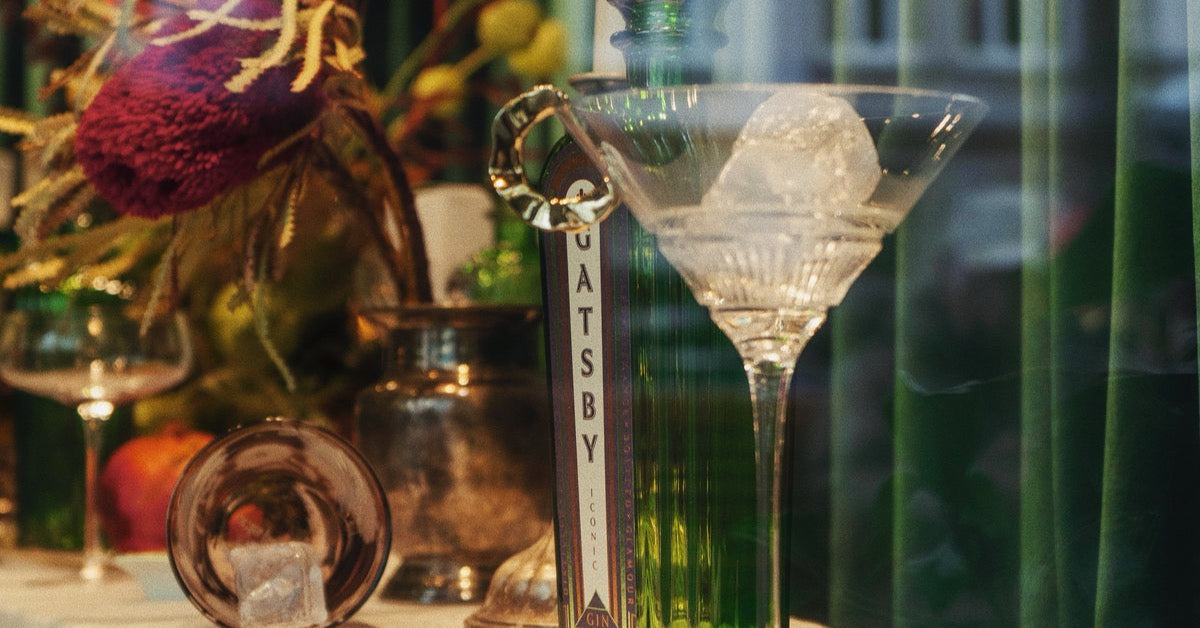
Gatsby Gin is a London Dry gin. It is a build of ten botanicals, led by juniper with coriander, angelica and orris behind it, then lemon peel and bitter orange for brightness, cardamom, cassia bark and turmeric for warmth, and licorice root on the finish. Its base is a neutral grain spirit distilled five times, and the gin is made in small batches in a traditional copper pot still in Fort Myers, Florida.
It is bottled at 44.8 percent alcohol by volume, or 89.6 proof, a little above the standard 40 percent, which helps the botanicals carry through a martini or a Negroni. In 2026 it took Silver in the Ultra-Premium category at The Gin Masters and Silver in Classic Gin at the ADI International Spirits Competition, both judged blind. The ten botanicals and what each one contributes are in behind the bottle.
Frequently asked questions about London Dry gin
Is London Dry gin made in London?
Not necessarily. London Dry names a production method, not a place. It can be made anywhere, as long as the gin gets its flavor from distillation.
What does "dry" mean in London Dry gin?
It means not sweet. A London Dry has no sugar added for flavor, which is what separates it from sweeter historical styles such as Old Tom.
What is the difference between gin and London Dry gin?
Plain gin can be made by mixing juniper and botanical flavorings into neutral spirit. London Dry gin must get its flavor from distilling the spirit together with the botanicals, with nothing added afterward except water.
Can London Dry gin be colored or aged?
A London Dry is meant to be a clear spirit whose flavor comes from the still. A gin rested in oak until it turns gold is usually sold as a barrel-aged gin instead.
Is Gatsby Gin a London Dry?
Yes. Gatsby Gin is a London Dry gin, made in small batches in a copper pot still in Fort Myers, Florida, and bottled at 44.8 percent alcohol by volume.
What is London Dry gin best for?
Classic cocktails: the martini, the gin and tonic, the Negroni, the gimlet and the French 75. Its crisp, juniper-led profile is what most of those recipes were written around.