

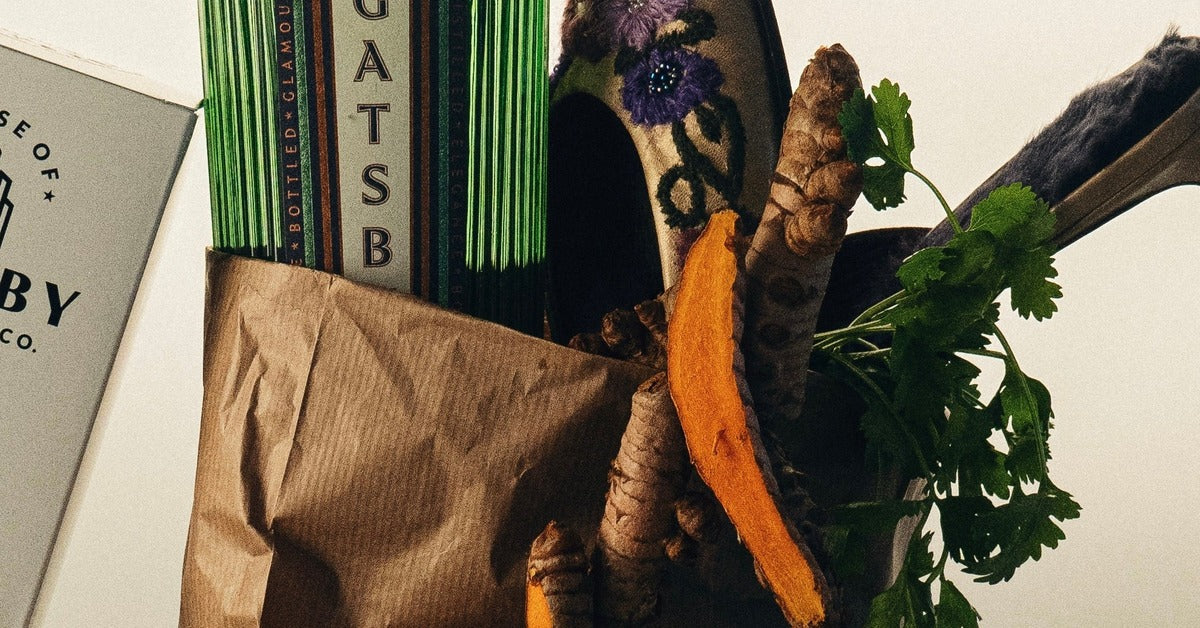
Gatsby Gin is built on ten botanicals: juniper, coriander, angelica, orris, licorice, lemon peel, bitter orange peel, cassia bark, cardamom and turmeric. Four of them build the structure, four carry the aromatics, and two do work you would only notice if they were gone. None of them are loud. Together they make a gin that reads as confident the moment it hits the glass.
Juniper, the backbone
Juniper is the spine of any gin worth the name, and not by tradition alone. Federal law requires that gin derive its main characteristic flavor from juniper berries, so a spirit that tastes of anything else first is not gin. Ours is selected for its piney lift and for the kind of resinous depth that anchors everything around it without dominating.
Coriander, angelica and orris: the structure
These three almost never get named on a bottle, and they are the reason a gin holds together.
Coriander is the lemony, slightly nutty layer most drinkers identify second, just after the juniper. It is the near-universal partner to juniper in classic gin building.
Angelica lengthens the body and gives the spirit a dry, savory undertone that pairs naturally with both tonic and dry vermouth. It is also a fixative: it binds the lighter aromatics so they arrive together rather than in sequence.
Orris is the other fixative, and the least tasted ingredient in the bottle. On its own it is close to invisible. Without it, a gin smells bright for a moment and then falls apart.
Citrus, in two voices
Lemon peel carries the acidity and the top note, the part of the aroma that reaches you before the glass does. Bitter orange peel adds a warmer, rounder counterweight underneath it. The two do not compete. They handle different parts of the conversation.
Turmeric, cassia bark and cardamom: the warmth
Turmeric brings color and a quiet, peppery warmth that registers more in the finish than at the front. It is the botanical that makes Gatsby read as golden rather than austere.
Cassia bark is the warm spice, a close relative of cinnamon with more heat and less sweetness. Cardamom adds a measured, almost menthol-adjacent brightness that lifts the whole spice section so it reads as aromatic rather than heavy.
Licorice, the finish
Licorice closes the architecture: a sweetness that is not sugar, a roundness that is not fat. It is what makes the spirit feel complete on the swallow rather than simply stopping.
Why ten botanicals and not more
Ten is enough to build complexity. Past a certain point, more botanicals start to mute each other rather than add up, and the number on the label stops telling you anything useful about the liquid. Every botanical here earned its place by being missed when it was not there.
This recipe is what blind panels scored when they awarded Gatsby Gin a Silver in the Ultra-Premium category at The Gin Masters 2026 and a Silver in Classic Gin at the 2026 ADI International Spirits Competition, with the bottle out of sight both times.
If you want the category-level version of this, start with how gin is made and what is actually in it. This article is the recipe; that one is the method.
Frequently asked questions about gin botanicals
How many botanicals are in Gatsby Gin?
Ten: juniper, coriander, angelica, orris, licorice, lemon peel, bitter orange peel, cassia bark, cardamom and turmeric.
What does turmeric do in gin?
It contributes color and a quiet peppery warmth that shows up in the finish rather than the front of the palate. In Gatsby Gin it is what makes the spice section read as golden rather than sharp.
Is cassia bark the same as cinnamon?
They are close relatives, not the same bark. Cassia is hotter and less sweet than true cinnamon, which is why it holds its own against juniper instead of turning the spirit into a dessert note.
Does a gin need juniper by law?
Yes. Under US federal law, gin must derive its main characteristic flavor from juniper berries and be bottled at no less than 40 percent alcohol by volume.