
There are eight types of gin worth knowing: London Dry, Plymouth, Old Tom, Navy Strength, contemporary gin, genever, barrel-aged gin, and flavored gins such as sloe gin. They are not eight equal categories. Some are defined by law, some by history, and one, sloe gin, is really a liqueur. What they share is juniper: in the United States, a spirit is only gin if juniper is its main flavor and it is bottled at 40 percent alcohol by volume or more.
That is why the types overlap so much. A gin can be a London Dry and navy strength at once, or contemporary and barrel-aged. The useful question is not which box a bottle sits in, but what the name tells you about how it was made and how it will taste.
How the law sorts the types of gin
Start with the rules, because they explain more than any tasting note. Under US federal regulations, gin can be made three ways: by original distillation from a mash, by redistilling a spirit with juniper and other botanicals, or by simply mixing neutral spirit with juniper and botanical extracts. All three are gin.
Only the first two can say more. A gin made exclusively by distillation or redistillation may be labeled "Distilled", "Dry", "London" or "Old Tom", or any combination of the four. A gin made by mixing, often called compound gin, cannot use any of them. So in the United States, "London Dry" on a label is a statement about method, not about a city, a sugar level or a flavor.
Europe is stricter. The European Union's spirit drinks regulation requires a London gin to take its flavor only from redistilling spirit with all of its natural botanicals, with nothing added afterward except water, spirit of the same purity and a trace of sweetening. It may not be colored, and it may carry no more than 0.1 grams of sweetening per liter. The minimum strength there is 37.5 percent, lower than the American 40.
The main types of gin
London Dry gin
The most familiar style, and the one most classic cocktails were written for. It is crisp and juniper-led, with citrus and spice behind the pine and no perceptible sweetness. Despite the name it can be made anywhere: London Dry describes the production method, and gins from Spain, Scotland and the United States carry it. If a recipe just says "gin", this is usually what the writer meant.
Plymouth gin
A softer, earthier style than London Dry, with less aggressive juniper and a rounder body. For decades Plymouth gin had legal protection in Europe and could only be made in the English city. That status lapsed in 2015, and today Plymouth gin is effectively the product of a single distillery there. It has long been associated with the Royal Navy and remains a bartender's choice for a gentler martini.
Old Tom gin
The sweeter, rounder style that bridged the malty early gins and the dry gins that replaced them in the nineteenth century. Old Tom is lightly sweetened, sometimes with sugar and sometimes through botanicals like licorice root, and it is the gin the original Tom Collins and Martinez were built on. US rules allow "Old Tom" as a label term but set no sugar level for it, so sweetness varies a great deal from bottle to bottle.
Navy Strength gin
Gin bottled at around 57 percent alcohol by volume, which is 100 degrees on the old British proof scale. The traditional story is that navy gin had to be strong enough that gunpowder soaked in a spill would still light; treat that as tradition rather than record. Navy strength is not a legal category anywhere, just a strength. The extra alcohol carries more botanical flavor, so it holds its own in a gimlet or a Negroni where a standard gin can disappear.
Contemporary gin (New Western or New American)
Gins that turn the juniper down and let other botanicals lead: cucumber, rose, citrus blossom, tea, local herbs. The style took off from the late 1990s and accounts for much of the craft gin on shelves today. In the United States juniper still has to be the main characteristic flavor, so a contemporary gin rebalances the recipe rather than removing the pine. The flavor is covered in more depth in what gin tastes like.
Genever
The Dutch and Belgian spirit that gin descends from. Genever is built on malt wine, a distilled grain mash with real flavor of its own, so it tastes rounder and maltier than any modern gin, closer to a light whiskey with juniper in it. In Europe it is a protected name made only in the Netherlands, Belgium and small neighboring areas of France and Germany. It is excellent neat and in old-fashioned style drinks.
Barrel-aged gin
Gin rested in oak casks, which gives it a pale gold color and notes of vanilla, caramel and wood. US rules explicitly allow gin to be aged in oak. Under European rules a London gin may not be colored, so a barrel-aged gin sold there cannot call itself London gin. Aged gins are the ones most often sipped neat, and they make a good bridge for whiskey drinkers.
Flavored gin and sloe gin
Flavored gins take a base gin and add fruit, flowers or sweeteners after distillation, often with color. Pink gin, whether flavored with berries, rhubarb or grapefruit, is the best-known example. These are usually lower in juniper and higher in sugar than a classic gin.
Sloe gin is a liqueur, not a gin, made by steeping sloes, a small sour relative of the plum, in gin with sugar. The fruit turns it deep red and the sugar makes it sweet. European rules classify it as a liqueur with a minimum strength of 25 percent, well below gin's. It is traditional in winter and in the sloe gin fizz.
Which type of gin for which drink
Match the style to the job. These are starting points, not rules.
Martini: a juniper-led London Dry for a sharp, classic drink; Plymouth for a softer one. The method matters as much as the bottle, and it is set out in the art of the perfect serve.
Gin and tonic: almost any style works. A juniper-led gin makes a sharp, piney drink; a contemporary gin makes a softer, more aromatic one.
Negroni and gimlet: a juniper-led or navy strength gin, because the Campari or the lime will flatten anything gentler.
Tom Collins and Martinez: Old Tom, which is what the original recipes called for.
Neat: barrel-aged gin or genever, or any well-made classic gin with a few drops of water.
Where Gatsby Gin fits
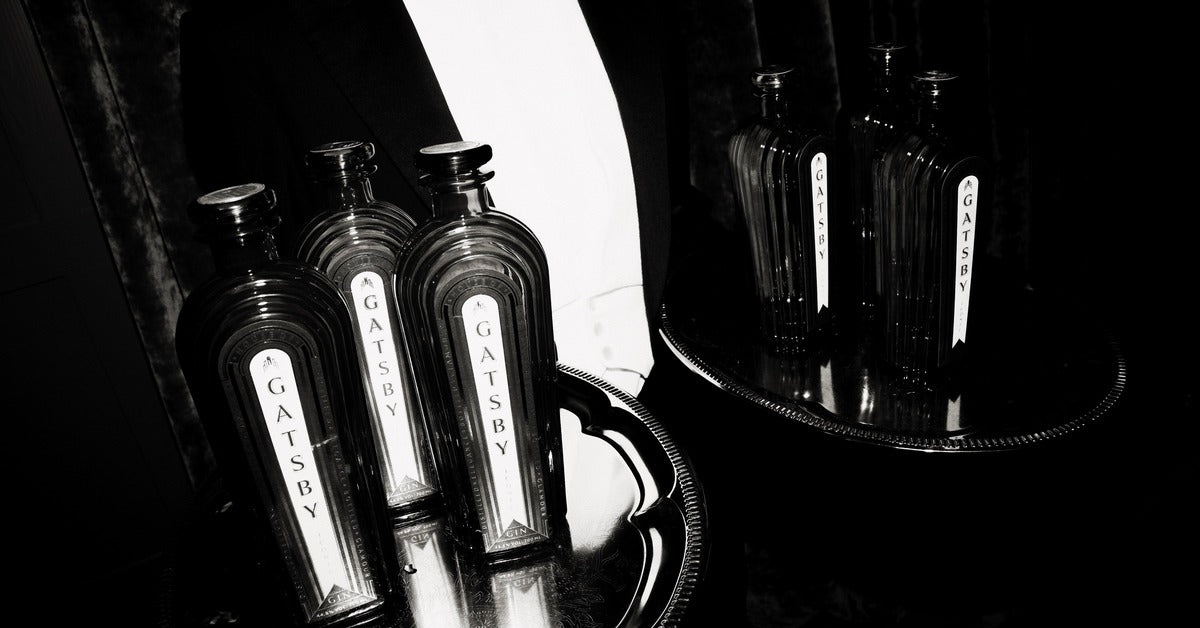
Gatsby Gin is a London Dry gin, part of the classic, juniper-led family rather than the contemporary one. It is a build of ten botanicals, led by juniper with coriander, angelica and orris behind it, then lemon peel and bitter orange for brightness, cardamom, cassia bark and turmeric for warmth, and licorice root on the finish. It is made in small batches in a traditional copper pot still in Fort Myers, Florida, and how gin is made explains what that process does.
At 44.8 percent alcohol by volume, or 89.6 proof, it sits between a standard 40 percent gin and navy strength: enough to carry the botanicals through a martini or a Negroni without the heat of a navy gin served neat. The ten botanicals and what each one contributes are in behind the bottle. In 2026 it took Silver in the Ultra-Premium category at The Gin Masters, tasted blind, and Silver in Classic Gin at the ADI International Spirits Competition.
Frequently asked questions about the types of gin
How many types of gin are there?
There is no fixed number, but most guides settle on seven or eight: London Dry, Plymouth, Old Tom, Navy Strength, contemporary, genever, barrel-aged and flavored gin. Legally, US rules draw one line: gin made by distillation or redistillation, which may be called distilled, and gin made by mixing neutral spirit with flavorings, often called compound gin, which may not.
Is London Dry gin made in London?
Not necessarily. London Dry names a production method, not a place. In the United States any gin made exclusively by distillation or redistillation may use the term, and in Europe a London gin must take all its flavor from redistillation, with no color and almost no sweetening, wherever it is made.
What is the difference between gin and London Dry gin?
All London Dry gin is gin, but not all gin is London Dry. Plain gin can be made by mixing flavorings into neutral spirit. London Dry has to get its flavor from distillation, and under European rules it cannot be colored or noticeably sweetened afterward.
What is Old Tom gin?
A lightly sweetened, rounder style of gin that was popular in the eighteenth and nineteenth centuries, before dry gin took over. It was the original gin in the Tom Collins and the Martinez. How sweet it is varies by producer, because US rules set no sugar level for the term.
Is sloe gin actually gin?
No. Sloe gin is a liqueur made by steeping sloe berries and sugar in gin. It is sweet, red and much lower in alcohol, and European rules require only 25 percent alcohol by volume, compared with 37.5 percent for gin there.
Which type of gin is best for a martini?
A juniper-led London Dry style gives the classic, sharp martini. Plymouth makes a softer one, and Old Tom a rounder, slightly sweet version closer to the drink's nineteenth-century ancestors. A gin bottled above 40 percent keeps more flavor once the stirring dilutes it.