

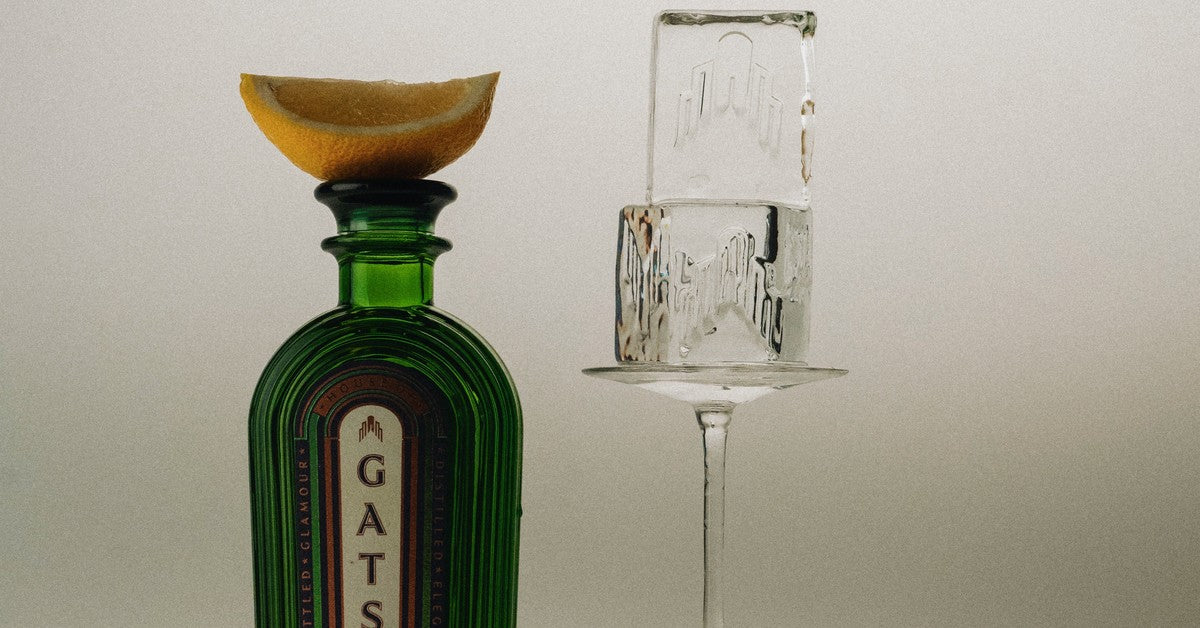
Gin and vodka start in the same place: a neutral spirit, distilled from grain or another farm product to 95 percent alcohol or more. Vodka is that spirit brought down to bottling strength, often filtered, and made to taste of as little as possible. Gin is that spirit given a flavor, and by law the flavor has to be led by juniper. So the difference between gin and vodka is the difference between a blank page and a written one: vodka is meant to be neutral, and gin is meant to taste of pine, citrus and spice.
Everything else follows from that. They share a legal minimum strength, the same calories at the same proof, and the same answer on gluten. Where they part is in how they are made, how they taste, and which drinks they belong in, the martini above all.
| Gin | Vodka | |
|---|---|---|
| Starts as | Neutral spirit | Neutral spirit |
| Flavor | Juniper first, by law, plus other botanicals | As little as possible |
| US minimum strength | 80 proof (40%) | 80 proof (40%) |
| Aged in wood | Allowed, in oak | Not allowed |
| Calories, 1.5 oz at 80 proof | About 97 | About 97 |
| Classic drinks | Martini, gin and tonic, Negroni, French 75 | Moscow Mule, Cosmopolitan, Bloody Mary |
How gin and vodka are made
Both begin the same way. Grain, potatoes, grapes or another farm product is fermented into a wash and distilled until it reaches at least 95 percent alcohol by volume. US regulations call the result neutral spirit, and at that strength very little of the original ingredient survives.
Vodka is neutral spirit with water added to bring it down to bottling strength. Under the federal standard, 27 CFR 5.142, it may carry up to two grams of sugar and one gram of citric acid per liter, and it may not be aged in wood. Many vodkas are also filtered through charcoal, and the rules let a vodka say "charcoal filtered" on the label only if a set minimum of activated carbon was used. Add any other flavoring and it is no longer vodka in the legal sense but flavored vodka or a specialty spirit, both separate categories.
Gin takes that same neutral spirit and gives it a flavor. Under 27 CFR 5.144, gin must take its main characteristic flavor from juniper berries. In a distilled gin, the spirit goes back into a still with the juniper and the other botanicals, and their aroma is carried over in the vapor. In a compound gin, botanical extracts are mixed into the spirit with no second distillation. The full process is in how gin is made, and what is actually in it.
Is gin just flavored vodka?
Not in law, and not in the glass. US rules treat gin as a class of its own, defined by juniper, while a vodka with added flavor is classed as flavored vodka. The fair part of the claim is that the two share a base. A compound gin, made by stirring botanical extracts into neutral spirit, is the closest gin comes to flavored vodka, and the rules still call it gin, though not distilled gin. A distilled gin is a different process altogether: the botanicals go through the still with the spirit, which is also what a London Dry is, as explained in what is London Dry gin.
How gin and vodka taste
Vodka is made to be neutral, so the differences between vodkas sit mostly in texture, a faint sweetness and a trace of the base ingredient. Gin is made to be tasted. A classic gin opens with pine and resin from the juniper, then citrus peel, then the warmth of coriander and spice, and it holds its flavor through a long drink. The full picture is in what does gin taste like, and the range of styles, from juniper-heavy London Dry to softer contemporary gins, is in types of gin, every style explained.
Is gin stronger than vodka?
Not by rule. In the United States both must be bottled at 40 percent alcohol by volume, or 80 proof, at the least. Most vodka is bottled right at that line, while gin more often runs higher. Many classic gins sit in the 80s and 90s proof, and Navy Strength gin is bottled at around 57 percent. Gatsby Gin is bottled at 44.8 percent, or 89.6 proof. At the same strength, a pour of either holds the same amount of alcohol, so neither is stronger than the other proof for proof.
Gin vs vodka: calories and gluten
At the same proof, gin and vodka have the same calories, because in both every calorie comes from the alcohol. A 1.5 ounce pour at 80 proof has about 97, with no carbohydrates or sugar; the numbers by proof and by cocktail are in how many calories are in gin. The same goes for gluten: pure distilled gin and vodka are both free of it, even when made from wheat, barley or rye, for the reasons set out in is gin gluten free.
Gin martini vs vodka martini
The martini began as a gin drink and stayed one for its first several decades. The vodka martini caught on in the United States after the Second World War, as vodka itself did. The two are made the same way, stirred over ice with dry vermouth, and they are two different drinks.
A gin martini tastes of the gin: juniper, citrus and spice, sharpened by the vermouth. A vodka martini is colder and cleaner, and leans on the vermouth and the garnish for its flavor. Ian Fleming split the difference in Casino Royale in 1953, where James Bond orders a Vesper, made with both. Our own way with the gin version is in the art of the perfect serve.
Gin or vodka: which should you choose?
Choose vodka when the other ingredients should lead: a Bloody Mary, a Moscow Mule, a Cosmopolitan. Choose gin when the spirit is part of the flavor. A gin and tonic, a Negroni and a French 75 are gin drinks because the juniper is part of the design, and swapping in vodka leaves a gap where it used to be.
Gatsby Gin is a London Dry gin built on ten botanicals, led by juniper, made in small batches in a copper pot still in Fort Myers, Florida, and bottled at 44.8 percent so that its character carries through a long drink.
Frequently asked questions about gin and vodka
What is the difference between gin and vodka?
Both start as neutral spirit. Vodka is bottled with as little flavor as possible, while gin is flavored with botanicals and, by law, must take its main flavor from juniper berries.
Is gin just flavored vodka?
No. They share a base, but US rules define gin as its own class: a spirit whose main characteristic flavor comes from juniper. A distilled gin is made by redistilling the spirit with the botanicals, not by adding flavoring to vodka.
Is gin stronger than vodka?
Not by rule. Both must be at least 80 proof in the US. Gin is often bottled a little stronger than the typical 80 proof vodka, but at the same proof they hold the same amount of alcohol.
Does gin or vodka have more calories?
Neither. At the same proof they have the same calories, about 97 in a 1.5 ounce pour at 80 proof, with no carbohydrates or sugar.
Should a martini be made with gin or vodka?
The classic martini is a gin drink, and the vodka martini is a later, cleaner variation. Both are stirred over ice with dry vermouth; the gin version tastes of juniper and botanicals, the vodka version mostly of the vermouth and garnish.
Can you use vodka instead of gin in a cocktail?
You can, but the drink will taste different. A gin cocktail counts on the juniper and botanicals, and vodka leaves them out.
Are gin and vodka gluten free?
Pure distilled gin and vodka are both free of gluten, even when made from wheat, barley or rye, because distillation leaves the protein behind. Flavored versions are the ones to check.