

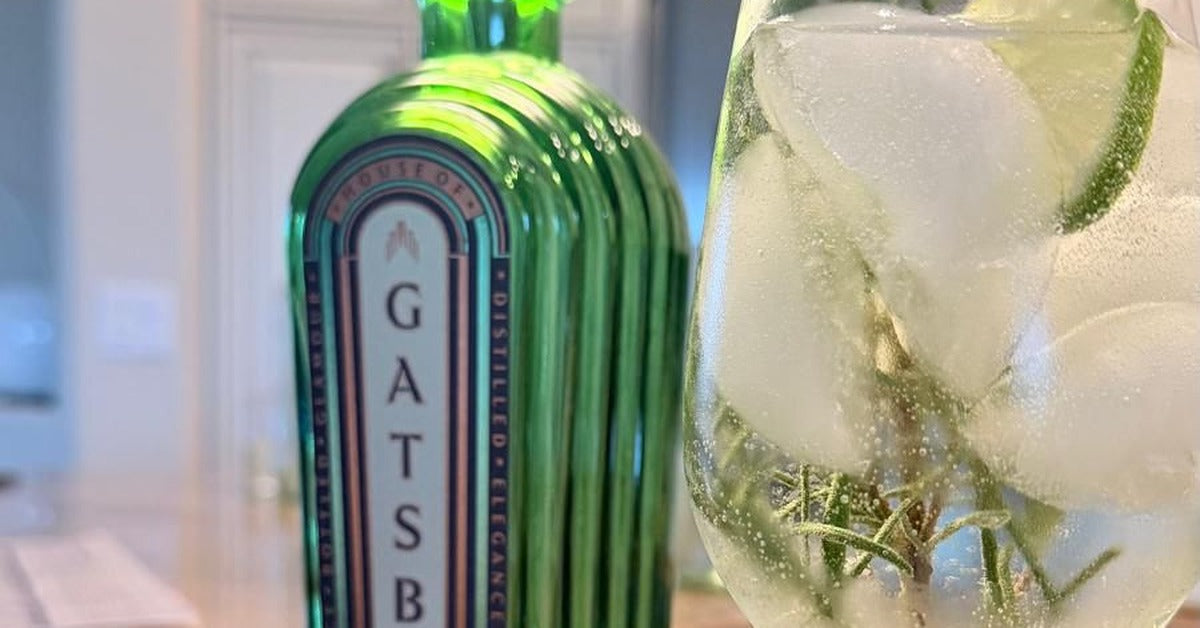
International Gin and Tonic Day falls on October 19 every year. To make a gin and tonic for it, fill a chilled highball glass to the rim with ice, pour in 1½ ounces of gin, top it with 4½ ounces of cold tonic water and twist a strip of lemon peel over the glass. That is one part gin to three of tonic, and it takes about two minutes.
The drink gets a second day in the United States, where National Gin and Tonic Day is kept on April 9. October belongs to everyone. At House of Gatsby we keep it with one word crossed out.
GinGatsby and Tonic Day.
The Gatsby and Tonic recipe
Glass: a highball, or a copa if you prefer a rounder glass. Makes: one drink.
- 1½ oz (45 ml) Gatsby Gin
- 4½ oz (135 ml) cold tonic water
- Ice, enough to fill the glass
- 1 strip of lemon peel
- Chill the glass. Straight from the freezer if you can, so the ice does not start melting before the tonic goes in.
- Fill it with ice, right to the rim.
- Pour the gin over the ice and give it a few seconds to chill.
- Top with tonic, poured slowly down the inside of the glass so it keeps its bubbles. One gentle stir is enough.
- Express the lemon. Hold the peel skin side down over the glass, give it a sharp twist so its oil mists the surface, then drop it in.
The right gin and tonic ratio
We pour a gin and tonic at 1:3, one part gin to three parts tonic. At that ratio the gin stays in front and the bitterness of the tonic frames it rather than covers it. Go to 1:2 for more of the gin's own character, or 1:4 for a longer, lighter drink in which the tonic has more to say. Whichever you choose, measure it. A free pour drifts with every glass, and in a drink with two ingredients the ratio is the recipe.
| Ratio | Gin | Tonic | The drink |
|---|---|---|---|
| 1:2 | 1½ oz | 3 oz | Gin forward, the botanicals at full volume |
| 1:3 | 1½ oz | 4½ oz | Our pour: the gin leads, the tonic frames it |
| 1:4 | 1½ oz | 6 oz | Longer and lighter, more tonic on the finish |
Lemon or lime in a gin and tonic?
Lemon, for this gin. Lemon peel is one of the ten botanicals in Gatsby Gin, so a fresh strip twisted over the glass picks up a note that is already in the spirit. Lime is louder. It brings a sharper citrus of its own and tends to cover the gin's rather than lift it.
Use the peel rather than a squeezed wedge. The oil in the skin carries the aroma; the juice only adds a sourness the drink does not need.
Glass, ice and tonic
A highball keeps the drink tall and narrow, which holds the bubbles longer. A copa, the round stemmed glass, gives the aroma more room. Either way, fill it with ice. A glass packed with ice melts more slowly than a few cubes floating in tonic, so the drink stays colder and less watered down.
Keep the tonic cold, and open a fresh bottle for each round. Tonic goes flat long before gin loses anything, as we explain in does gin go bad. A classic, lightly sweetened tonic lets the gin speak; heavily flavored tonics tend to talk over it.
Why it is called tonic: the quinine in tonic water
The bitterness in tonic water is quinine, which comes from the bark of the cinchona tree. In nineteenth-century British India, officers were given a daily dose of it against malaria, and because quinine powder is fiercely bitter they mixed it with soda water and sugar. Gin followed, and by the second half of the century makers such as Erasmus Bond and Schweppes were selling tonic water by the bottle. The longer history runs from the Andes by way of Spain and the Netherlands.
Today's tonic is a flavor, not a medicine. In the United States, quinine may go into carbonated drinks only as a flavoring, at no more than 83 parts per million, and the label has to declare it (21 CFR 172.575). In a 4½ ounce pour of tonic, that is at most about 11 milligrams.
What a Gatsby and Tonic tastes like
Juniper first, as a London Dry gin should be, then lemon and bitter orange over the dry edge of the quinine. The turmeric and cassia bark come through as warmth in the finish, and the lemon on top carries to the last sip. If you are still deciding whether gin is for you, start with what gin tastes like on its own.
Frequently asked questions about the gin and tonic
When is International Gin and Tonic Day?
October 19, every year. In the United States there is also a National Gin and Tonic Day on April 9.
What is the best ratio for a gin and tonic?
One part gin to three parts tonic is the place to start: 1½ ounces of gin to 4½ ounces of tonic. Use 1:2 for a more gin-forward drink, or 1:4 for a longer, lighter one.
Lemon or lime in a gin and tonic?
Either works, but lemon suits a gin that has lemon among its botanicals, such as Gatsby. Lime is sharper and tends to cover the gin's own citrus.
What glass do you use for a gin and tonic?
A highball, or a copa. Chill it first and fill it to the rim with ice.
Should you stir a gin and tonic?
Once, gently. Pour the tonic slowly down the inside of the glass, then give it one stir so the drink is mixed but keeps its bubbles.
How much quinine is in tonic water?
Very little. US rules allow quinine in carbonated drinks only as a flavoring, at no more than 83 parts per million, which is at most about 11 milligrams in a 4½ ounce pour.
How many calories are in a gin and tonic?
About 140 with 1½ ounces of 80 proof gin and 4 ounces of regular tonic, around 40 of them from the sugar in the tonic. The full breakdown is in gin calories.