
A speakeasy was an illegal bar that sold alcohol in secret, above all during Prohibition in the United States. From January 17, 1920, to December 5, 1933, making, selling and transporting liquor was banned nationwide, and the speakeasy was where Americans went to drink anyway. The name comes from the advice to "speak easy," meaning to speak quietly, so that the police and the neighbors would not hear about the place. Speakeasies were also called blind pigs and blind tigers, and today the word also means a legal bar built in their image: an unmarked door, low light and a serious cocktail list.
Below: where the word comes from, what blind pigs and blind tigers were, how speakeasies kept their doors shut, how many there were, what The Great Gatsby makes of them, and how Prohibition ended on December 5, 1933, the date still celebrated as Repeal Day.
| Date | What happened |
|---|---|
| December 18, 1917 | Congress passes the 18th Amendment and sends it to the states |
| January 16, 1919 | The 18th Amendment is ratified, banning the manufacture, sale and transportation of intoxicating liquors from one year later |
| October 28, 1919 | The Volstead Act, the law that enforces it, passes over President Wilson's veto |
| January 17, 1920 | Prohibition takes effect across the United States |
| March 22, 1933 | President Roosevelt signs the Cullen-Harrison Act, legalizing 3.2 percent beer and light wine from April 7 |
| December 5, 1933 | The 21st Amendment is ratified and the 18th is repealed: Repeal Day |
Why is it called a speakeasy?
Because you were meant to speak easy, which is to say quietly. The name comes from the habit of keeping your voice down about an unlicensed bar, in public and inside it, so as not to alert the police or the neighbors, as Wikipedia's entry on the speakeasy explains. The Mob Museum's history of the speakeasy puts the whisper at the door: you spoke low when you gave the password, so the law would not overhear it.
The word is older than Prohibition by three decades. In the United States it first appears in print in 1889, in Pennsylvania newspapers writing about unlicensed saloons around Pittsburgh. The year before, the Brooks High-License Act had raised the yearly liquor license fee there from $50 to $500, and rather than pay it, most bars went underground: by 1890, Pittsburgh had about 700 speakeasies and 92 licensed liquor dealers. In 1891 The New York Times credited the word to Kate Hester, who ran an unlicensed saloon in nearby McKeesport and was said to hush her rowdy customers by telling them to "speak easy."
The phrase itself is older still. The word historian Peter Jensen Brown traced "speak-softly-shop," meaning a smuggler's house, to a London slang dictionary of 1823, and "speak easy shop," for a place selling liquor without a license, to the memoir of a Royal Navy gunner written in 1844. An Australian newspaper, the Sydney Herald, printed "speakeasy's" in 1837 in a report on the colony's sly-grog shops. America made the word famous. It did not coin it.
What is a blind pig? What is a blind tiger?
Two older American names for the same thing, both from the 19th century, long before national Prohibition, and each describes a dodge. A blind pig sold tickets to see an animal or a show and served the liquor as a "free" extra. The Mob Museum's glossary of Prohibition slang defines it as a business charging a fee for "a show" and serving illegal alcohol on the side, and one old account quoted in Wikipedia's entry describes "charging 25 cents for a sight of the pig and throwing in a gin cocktail gratuitously."
A blind tiger was blind in a second sense: the customer never saw who was selling. In 1875 a Dallas newspaper described one built into the wall of what looked like a billiard saloon. You pulled out a drawer, dropped in your money, called for what you wanted, and pulled the drawer out again to find your drink waiting. By the 1920s the names had multiplied: gin joint, juice joint, beer flat for the apartment version common in the Midwest, and above all, speakeasy.
How Prohibition made the speakeasy
The 18th Amendment, ratified on January 16, 1919, prohibited "the manufacture, sale, or transportation of intoxicating liquors" across the country from one year later, as its text at the National Archives reads. The Volstead Act, passed over President Woodrow Wilson's veto that October, enforced it and drew the line at one-half of 1 percent alcohol by volume, low enough to take in beer and wine as well as spirits. When the country went dry on January 17, 1920, the legal saloons closed. What remained, in the Mob Museum's account, was liquor from a druggist for "medicinal" purposes, from a clergyman for "religious" ones, from a bootlegger, or in a private, unlicensed bar.
The speakeasy also changed who drank together. The saloons that closed had catered to men. In the speakeasies, and at the house parties Prohibition also produced, men and women drank side by side, which the Mob Museum counts among the era's lasting changes to American social life. Organized crime grew rich supplying them.
How many speakeasies were in New York?
Nobody licensed them, so every count is an estimate. The National Archives puts the number in New York City alone at anywhere from 30,000 to 100,000 by 1925. The Mob Museum counts 32,000 at the height of Prohibition in the late 1920s, and notes that in Chicago, Al Capone's organization supplied thousands of speakeasies under its control.
How did speakeasies work?
With discretion, and the right introductions. Speakeasies ranged from clubs with jazz bands and dance floors to back rooms, basements and rooms inside apartments, and they were, in the Mob Museum's words, generally ill-kept secrets. Getting in usually meant being known at the door, giving a password, or at some places showing a membership card. The legal risk sat behind the bar. The 18th Amendment banned making, selling and transporting liquor, not drinking it, and it was the owners, not their customers, who ran afoul of the Volstead Act, though a raid could sweep up both.
Fronts, payoffs and raids
The most respectable front was the drugstore. The Volstead Act let doctors with a federal permit prescribe liquor as medicine, up to a pint every ten days, and druggists fill the prescriptions, a loophole the Mob Museum's history of alcohol as medicine shows was lucrative for both. Police and federal Prohibition agents raided speakeasies, and owners paid officers to look the other way or to tip them off before a raid. The most careful owners built for the worst case. At the 21 Club on West 52nd Street in Manhattan, the owners had a camouflaged door, a secret wine cellar behind a false wall, and a bar that, at the push of a button, dropped the bottles down a chute to smash and drain into the cellar before agents could seize them as evidence.
What was poured once you were inside, from bathtub gin to the honey-and-lemon cocktails built to disguise it, is a story of its own. Even the mixers changed: dry ginger ale became a fixture of American drinking in these years as a mixer for liquor, as what to mix with gin recounts.
Speakeasies in The Great Gatsby
F. Scott Fitzgerald set The Great Gatsby in the summer of 1922, the third year of Prohibition, and the novel never once uses the word speakeasy. It does not need to. Nick Carraway dates that summer himself, by the names of Gatsby's guests written on an old timetable "headed 'This schedule in effect July 5th, 1922.'" When he meets Gatsby for lunch, it is "In a well-fanned Forty-second Street cellar," where the head waiter's first question is "Highballs?"
Gatsby's fortune is a Prohibition rumor. At his parties the gossip runs, "'He's a bootlegger,' said the young ladies, moving somewhere between his cocktails and his flowers." And in the suite at the Plaza Hotel where the story comes to its crisis, Tom Buchanan says he has found out what Gatsby's "drugstores" were: "He and this Wolfshiem bought up a lot of side-street drugstores here and in Chicago and sold grain alcohol over the counter." Selling liquor through drugstores was lucrative enough, and open enough, that Wikipedia's entry on Prohibition cites the novel as an example. Grain alcohol, for its part, is the kind of high-proof neutral spirit that every gin starts from, as how gin is made explains.
When did Prohibition end? Repeal Day, December 5, 1933
In two steps. On March 22, 1933, President Franklin D. Roosevelt signed the Cullen-Harrison Act, which made beer and light wine of 3.2 percent alcohol by weight legal from April 7, and the celebrations in bars and former speakeasies began then, the Mob Museum notes. Full repeal came on December 5, 1933, when Utah's convention made it 36 states, three-quarters of the 48, to ratify the 21st Amendment. Its first section is one sentence: "The eighteenth article of amendment to the Constitution of the United States is hereby repealed." Roosevelt announced the repeal in a proclamation that day.
It remains the only amendment ratified by state conventions rather than state legislatures, and the only one that repeals another. Its second section left alcohol to the states, which is why Prohibition lasted longer in some of them. In his proclamation, Roosevelt wrote that he trusted "in the good sense of the American people that they will not bring upon themselves the curse of excessive use of intoxicating liquors." December 5 is still celebrated as Repeal Day, and some bars mark it with drinks at 1933 prices.
What is a speakeasy bar today?
A legal bar that keeps the old manners: an unmarked or hidden entrance, sometimes a password or a reservation, low light and a serious cocktail list. Speakeasy-style bars came back in 2000 and have since spread from New York to cities around the world, as Wikipedia's entry traces. Everything behind the bar is different. Repeal ended the speakeasy and began the licensed barroom, where liquor is subject to federal regulation and taxes, as the Mob Museum puts it.
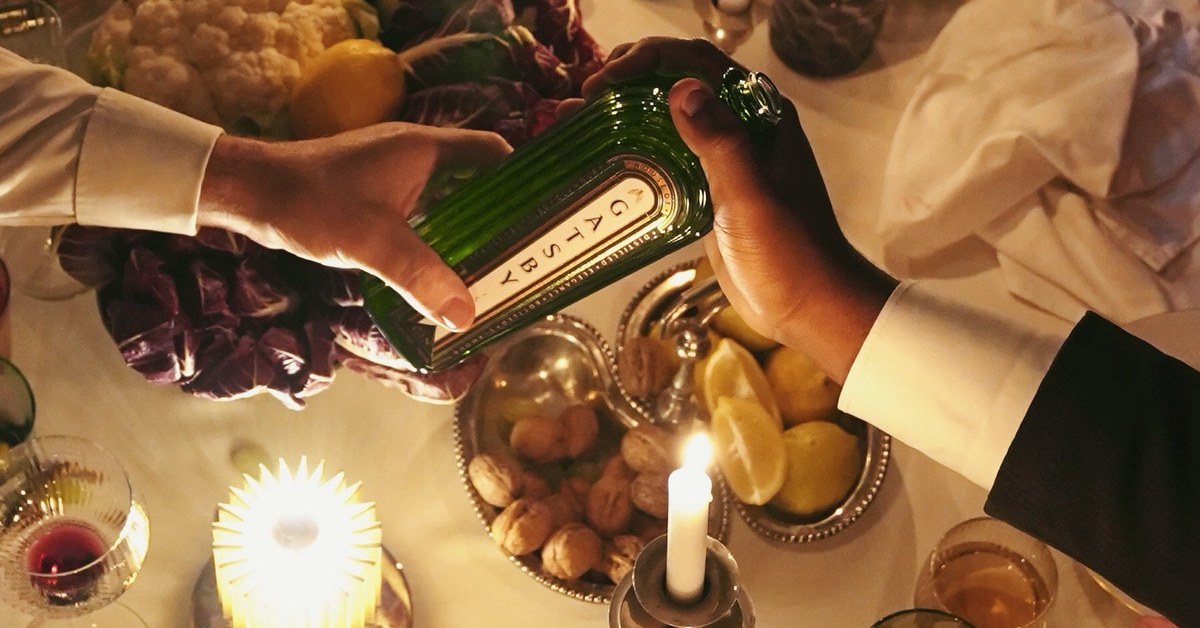
Gatsby Gin is a London Dry gin of ten botanicals, distilled in small batches in a copper pot still in Fort Myers, Florida, and it is at home in the drinks the speakeasy years made famous. Our South Side, gin with fresh mint and lemon, goes by the name The Speakeasy on our cocktails page. What makes a gin London Dry is set out in what is London Dry gin.
Frequently asked questions about speakeasies
What is a speakeasy?
An illegal bar that sold alcohol in secret, especially during Prohibition in the United States, from 1920 to 1933. Today the word also describes a legal bar designed in the same hidden, low-lit style.
What does speakeasy mean?
It comes from "speak easy," an old way of saying speak quietly. Customers kept their voices down about an unlicensed bar so the police and the neighbors would not hear of it.
What is a blind pig?
A 19th-century American name for a place that sold liquor illegally, often by charging admission to see an animal or a show and serving the drink as a "free" extra.
What is a blind tiger?
Another 19th-century name for an illegal bar, often one where the customer never saw the seller, for example by paying and collecting the drink through a drawer in a wall.
When did Prohibition start and end?
It began on January 17, 1920, under the 18th Amendment and the Volstead Act, and ended on December 5, 1933, when the 21st Amendment was ratified.
What is Repeal Day?
December 5, the anniversary of the day in 1933 when the 21st Amendment was ratified and national Prohibition ended. It is still celebrated with a drink.
How many speakeasies were in New York during Prohibition?
Estimates run from 30,000 to 100,000 by 1925, according to the National Archives. The Mob Museum puts the number at 32,000 at the height of Prohibition in the late 1920s.
Was it illegal to drink in a speakeasy?
The 18th Amendment banned making, selling and transporting liquor, not drinking it, so the main legal risk fell on the people running the bar. Customers could still be caught up in a raid.
Did speakeasies have passwords?
Many did. Getting in often meant being known at the door, giving a password or showing a membership card.
What is the difference between a speakeasy and a bar?
Originally, the law: a speakeasy sold alcohol illegally. Today a speakeasy-style bar is a licensed bar that keeps the hidden entrance and the quiet atmosphere of the original.
Is there a speakeasy in The Great Gatsby?
The word never appears, but Nick meets Gatsby for lunch in a Forty-second Street cellar where the head waiter offers highballs, and Gatsby's money is rumored to come from bootlegging and from drugstores selling grain alcohol.